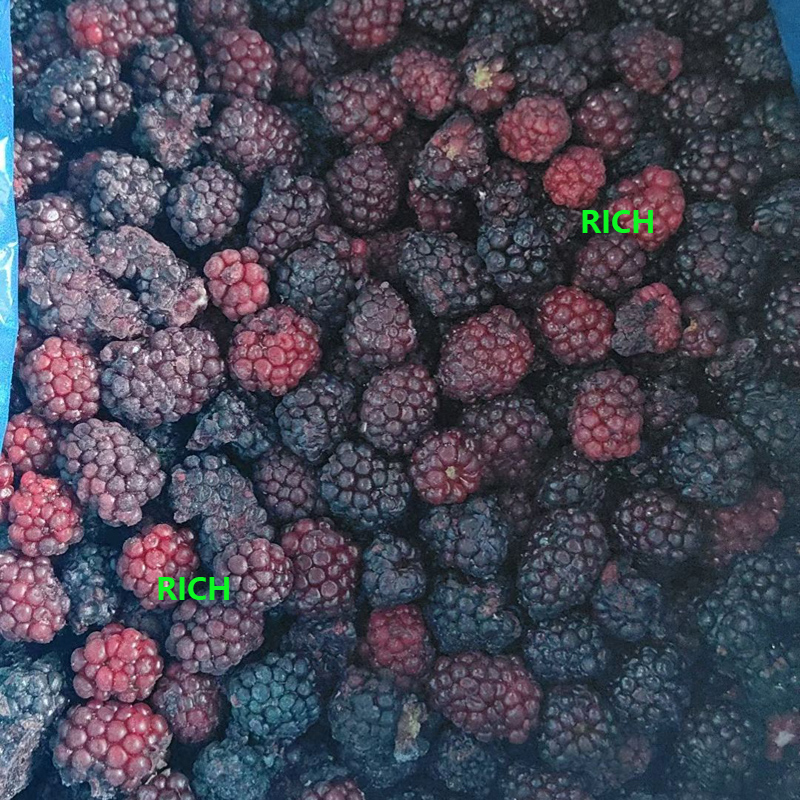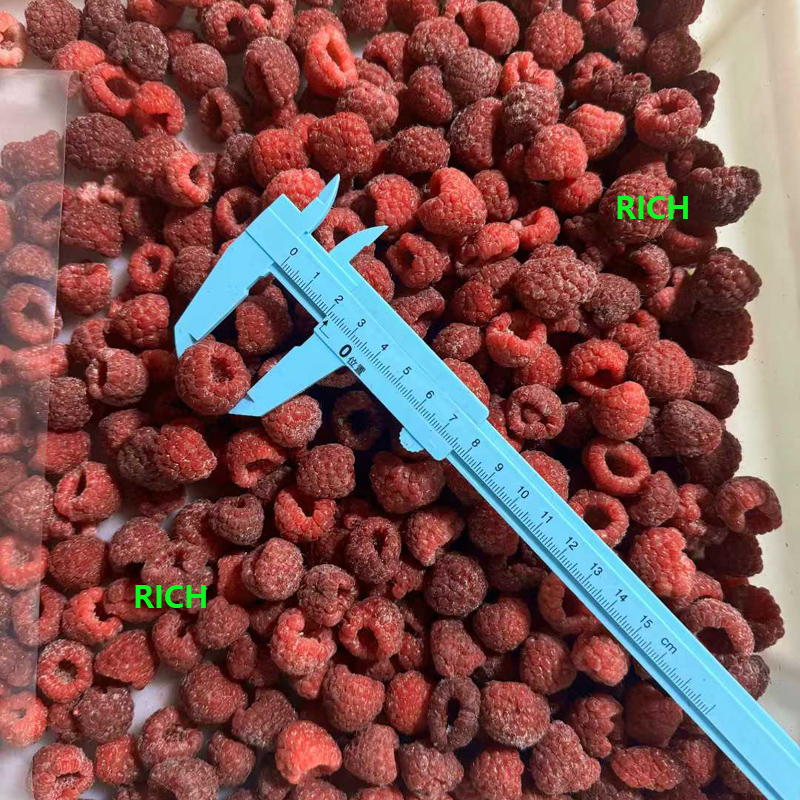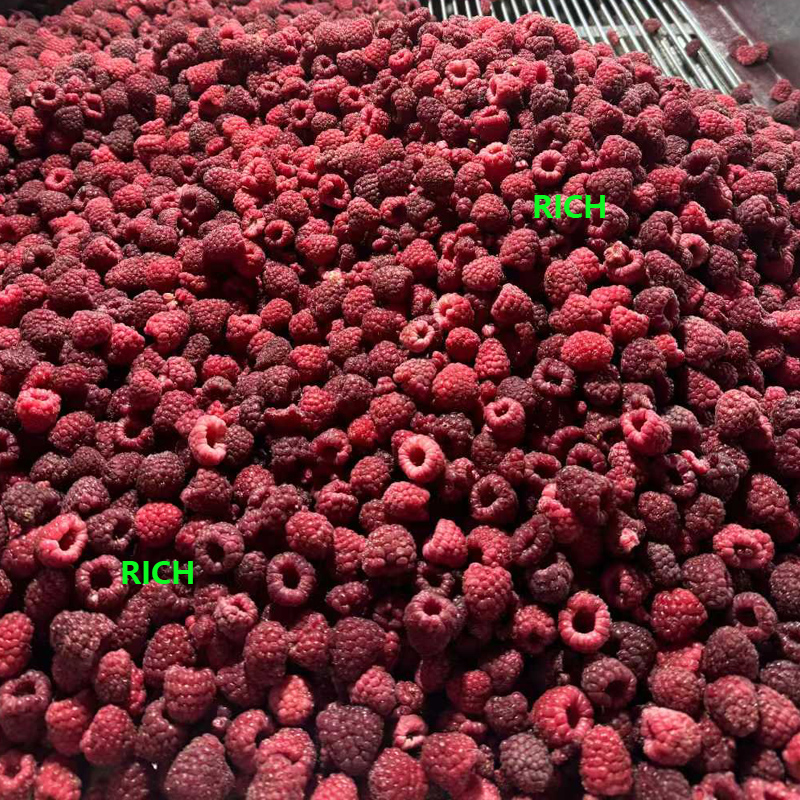
Freezing Raspberries Fruit (IQF / Industrial Processing Perspective)
Freezing Raspberries Fruit Concept
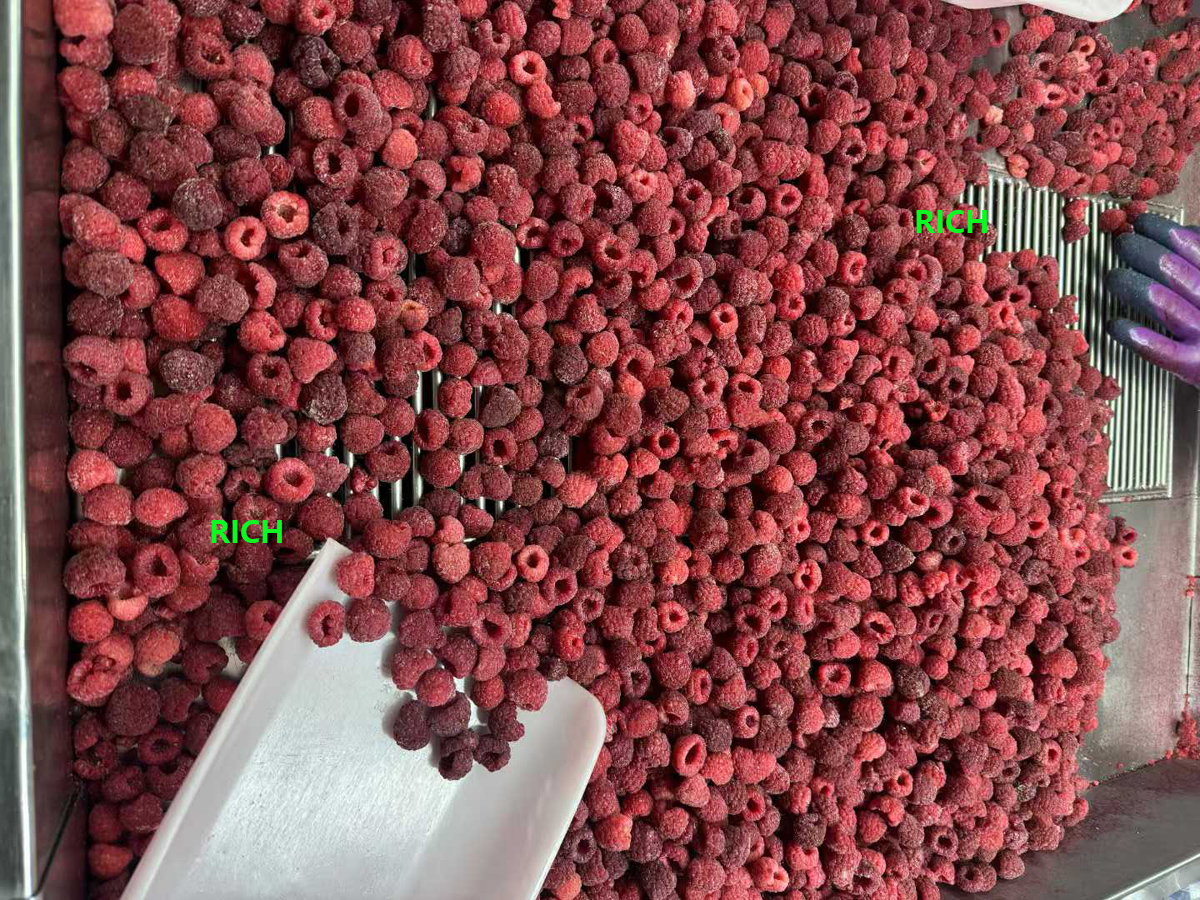
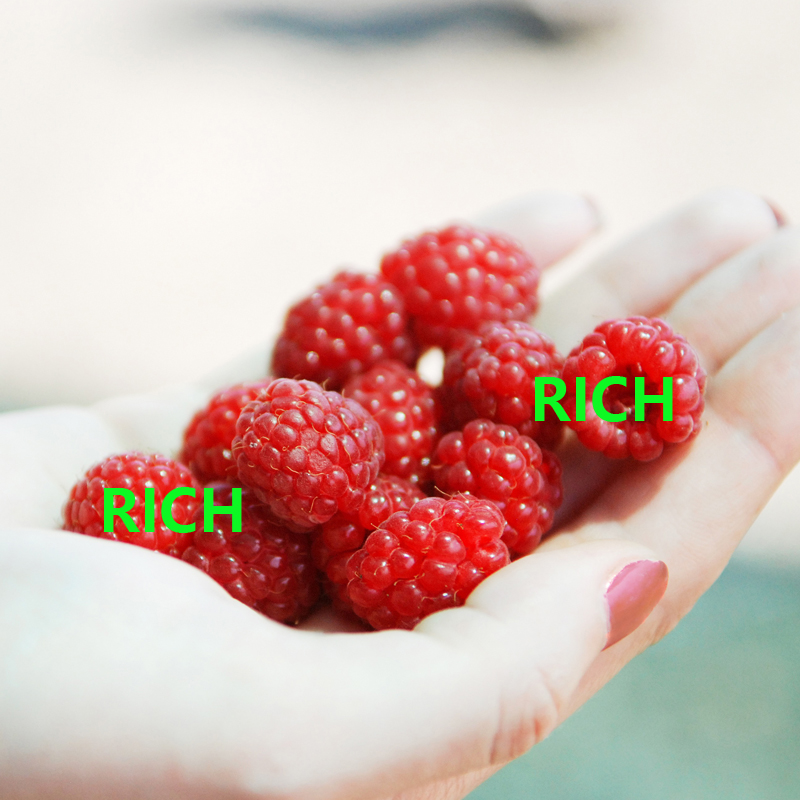
Raspberries are among the most delicate berry fruits to freeze due to their hollow core, thin skin, and high juice content. Successful freezing focuses not only on temperature control, but also on minimizing mechanical stress throughout harvesting, sorting, and freezing.
When processed correctly, frozen raspberries deliver high aroma retention, vivid color, and clean fruit definition for downstream applications.
Raw Fruit Selection Criteria for Freezing Raspberries Fruit
Harvested at full physiological ripeness
Balanced sugar–acid ratio for flavor stability after freezing
Firm drupelets with minimal surface damage
Low field heat at intake to reduce drip loss
Free from pest damage and overripe collapse
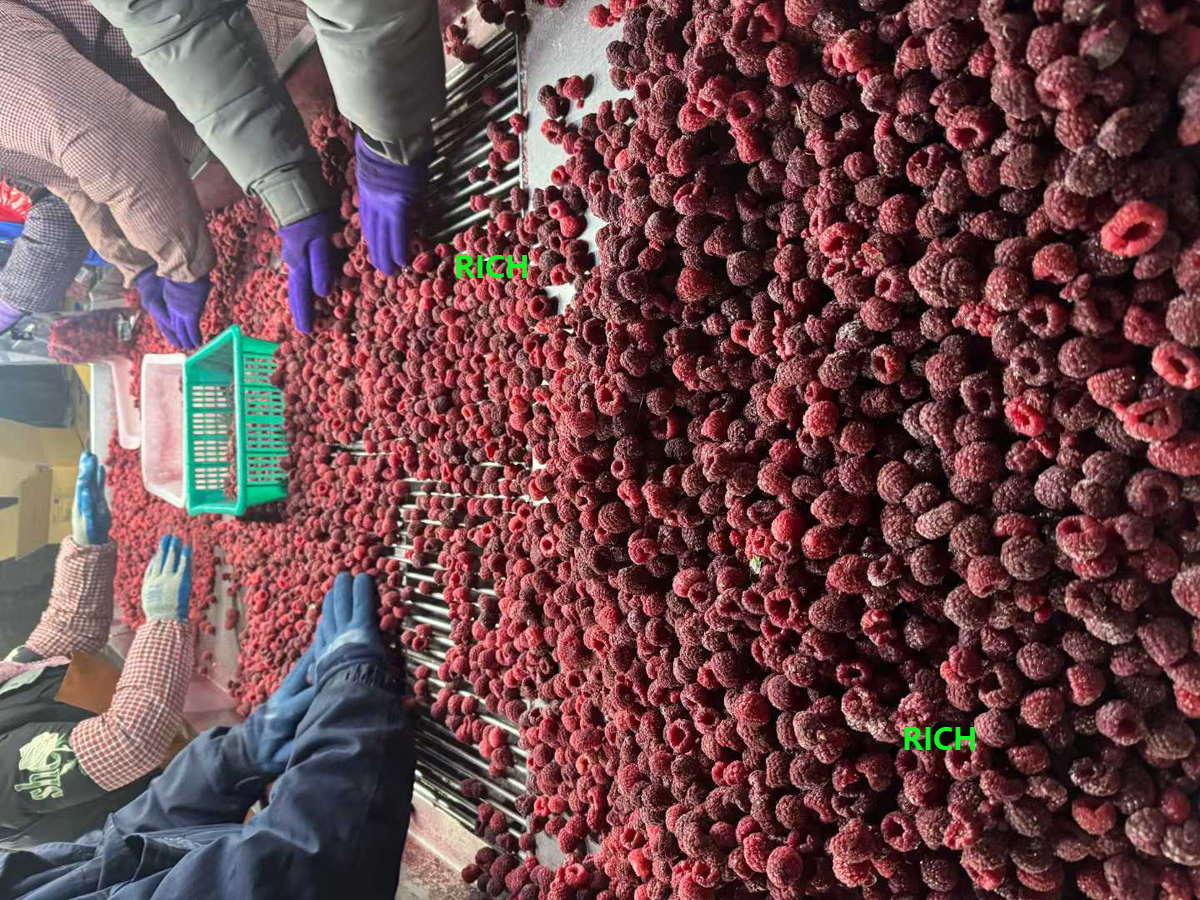
Only berries meeting freeze-grade standards are selected; substandard fruit is diverted to purée or juice lines.
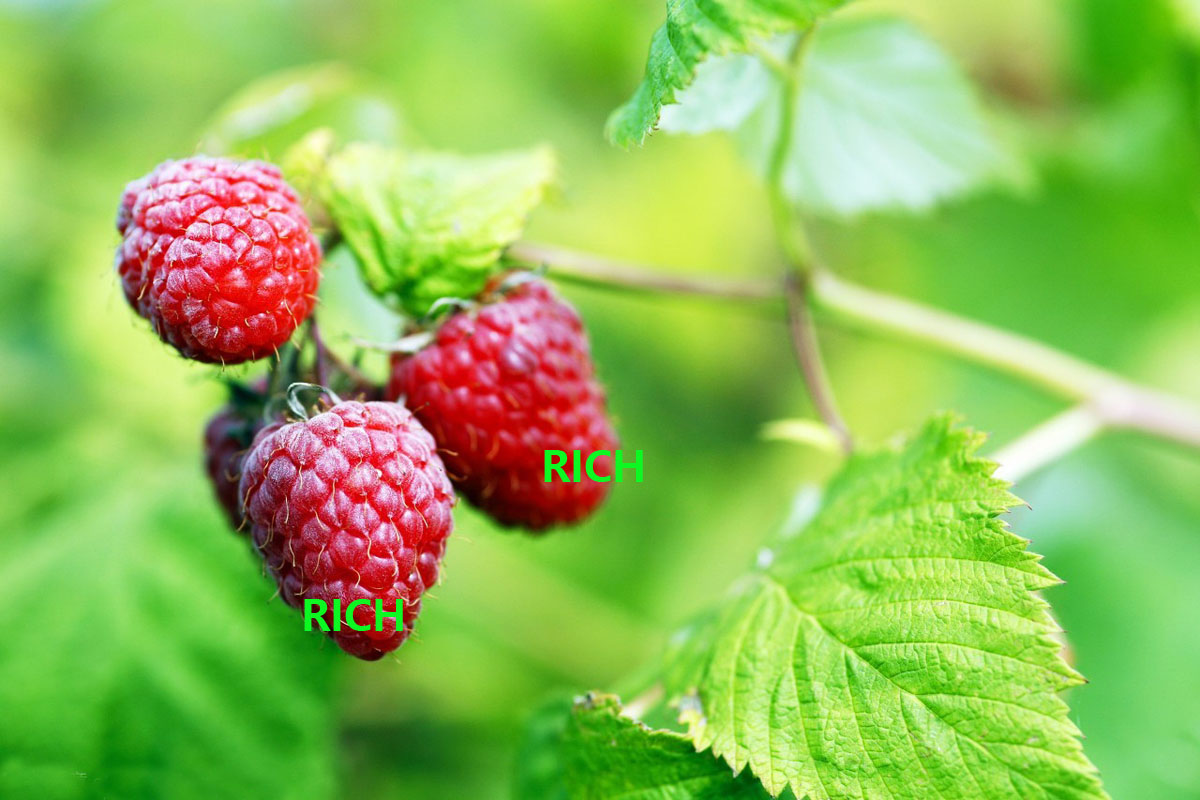
Freezing Technology & Behavior
Typically frozen using Individual Quick Freezing (IQF) tunnels
Rapid crust-freezing prevents cell rupture
Hollow core structure requires gentle air velocity control
Target core temperature: ≤ –18°C
Correct freezing preserves:
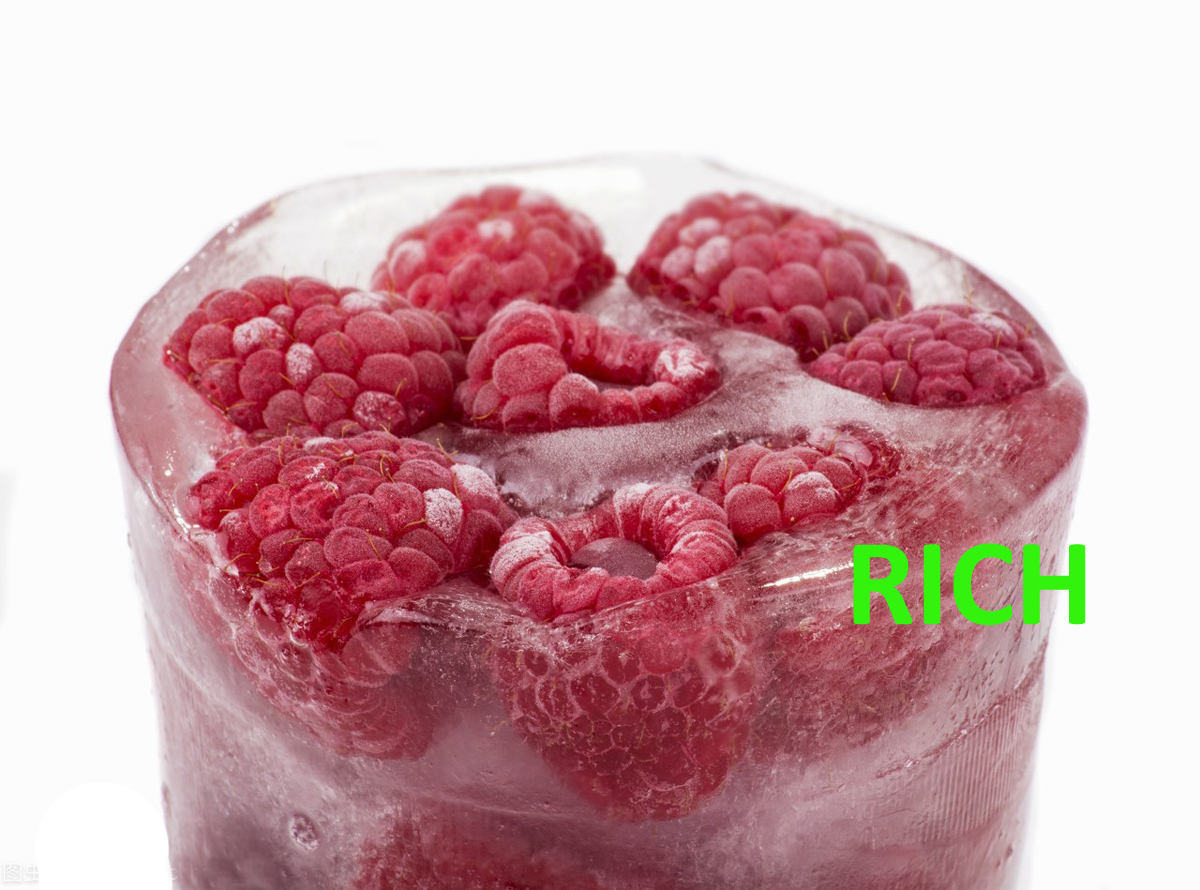
Natural berry shape
Volatile aroma compounds
Deep red color without browning
Physical & Sensory Characteristics After Freezing
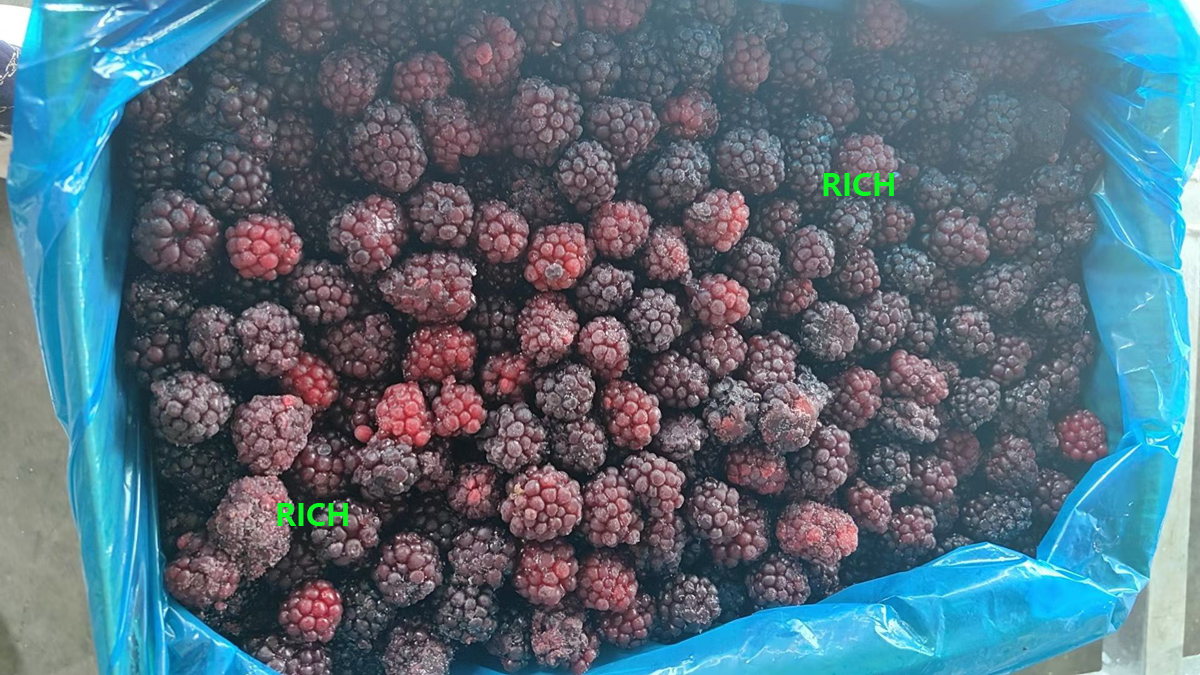
Shape: Whole, free-flowing berries
Texture (frozen): Firm and non-agglomerated
Texture (thawed): Soft, suitable for blending and baking
Color: Dark red to ruby
Flavor: Fresh, aromatic, slightly tart
Due to natural structure, raspberries are not intended for fresh-eating after thaw, but excel in processed uses.
Typical Technical Parameters (Reference Range)
-
Moisture content: High, fruit-inherent
-
Brix: 8 – 12 (variety & season dependent)
-
Broken berries: Controlled, not eliminated
-
Ice crystals: Fine and evenly distributed
-
Foreign material: Nil
Specifications can be tightened for premium bakery or retail-grade IQF programs.
Packaging & Storage for the Freezing Raspberries Fruit
-
Retail: Small consumer bags with moisture barriers
-
Foodservice: 1–2.5 kg polybags
-
Industrial: 10 kg or 20 kg cartons with inner liner
Storage conditions for the Freezing Raspberries Fruit
-
Temperature: –18°C or below
-
Avoid temperature fluctuation to prevent frost buildup
-
Shelf life: Up to 24 months under stable frozen conditions
Functional Advantages in Processing
-
Immediate usability without washing
-
Portion control due to free-flowing nature
-
Stable year-round supply
-
Consistent flavor profile across batches
-
Reduced labor and waste compared to fresh fruit
Primary Applications of the Freezing Raspberries Fruit
Freezing Raspberries Fruit are primarily valued as a processing fruit, not a thaw-and-eat item. Their intense aroma, vibrant color, and natural acidity make them a preferred ingredient across beverage, bakery, dairy, and nutritional industries.
-
Smoothies and beverage bases
-
Bakery fillings and inclusions
-
Yogurt and dairy preparations
-
Ice cream and sorbet
-
Jams, coulis, and fruit sauces
-
Nutritional powders and freeze-dried inputs
Application Notes
Best used directly from frozen in blending or cooking
Thaw only when purée consistency is required
Natural juice release is expected and useful in formulations
Not recommended for fresh fruit presentation after thawing
Handling & Processing Notes
-
Do not refreeze once thawed
-
Add frozen directly into hot or blended applications
-
For baking, use directly from frozen to limit bleed
-
Thaw under refrigeration if required
Quality Assurance & Compliance
-
Processed under HACCP & GMP systems
-
Metal detection and optical sorting applied
-
Traceable by harvest lot
-
COA and microbiological reports available
FAQ
Q1: Why do Freezing Raspberries Fruit release juice after thawing?
This is a natural result of their cellular structure and high water content, not a quality defect.
Q2: Are broken berries considered a defect?
A small percentage is unavoidable and acceptable, depending on application.
Q3: Can Freezing Raspberries Fruit be used for freeze-drying?
Yes. They are a common input material for freeze-dried raspberry products.
Q4: Are sugars or additives added before freezing?
No. Standard frozen raspberries are 100% fruit, without additives.
Q5: Can frozen raspberries be eaten directly after thawing?
They are safe to eat, but texture will be soft. Frozen raspberries are intended mainly for processing rather than fresh-fruit presentation.
Q6: What causes clumping in frozen raspberries?
Clumping usually results from temperature fluctuation during storage or transport, causing partial thawing and refreezing. Stable cold-chain management prevents this issue.