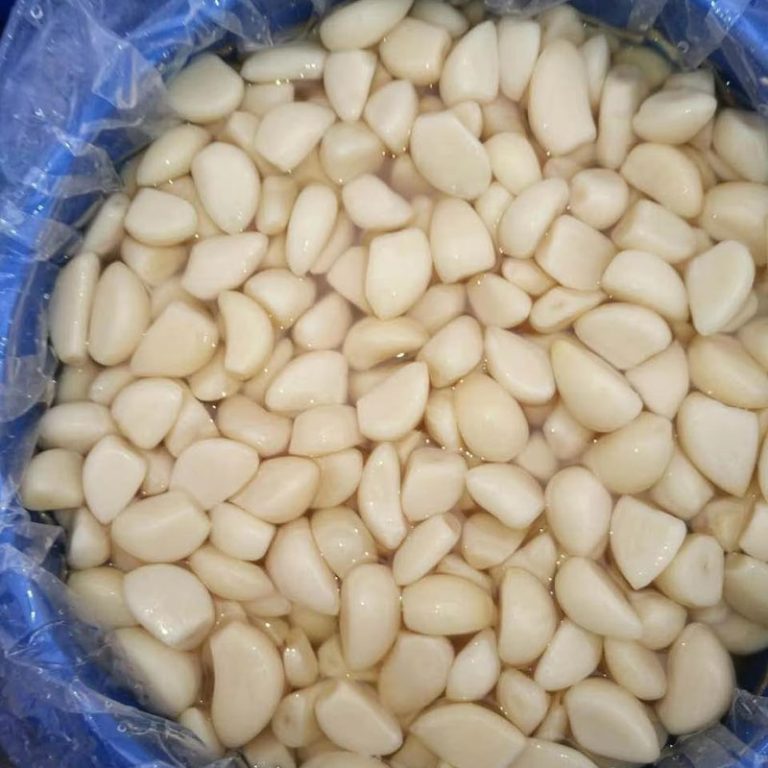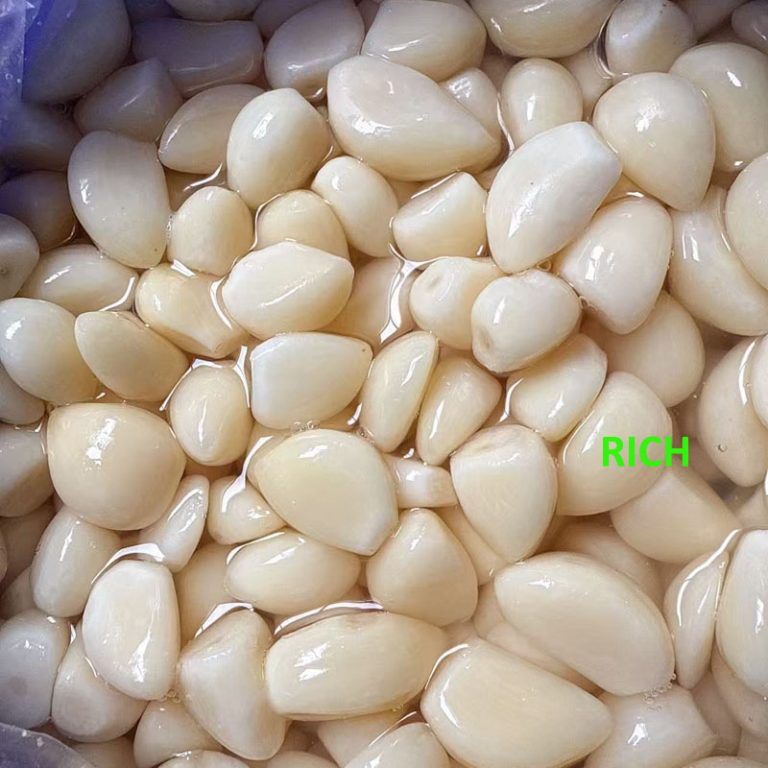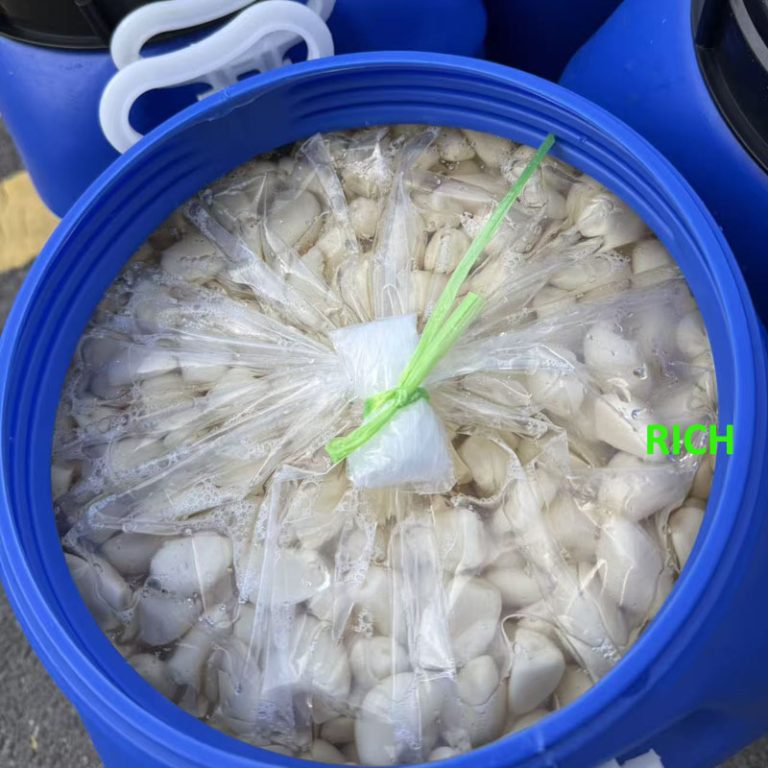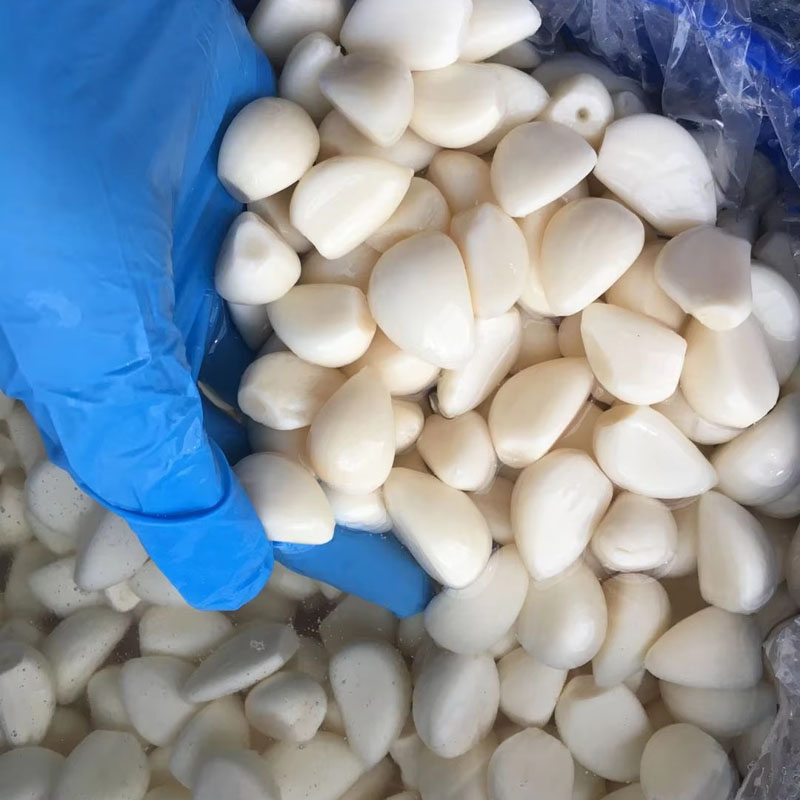
Salted Garlic Cloves in Brine
Controlled-Preservation Ingredient for Industrial Processing
1. Product Definition
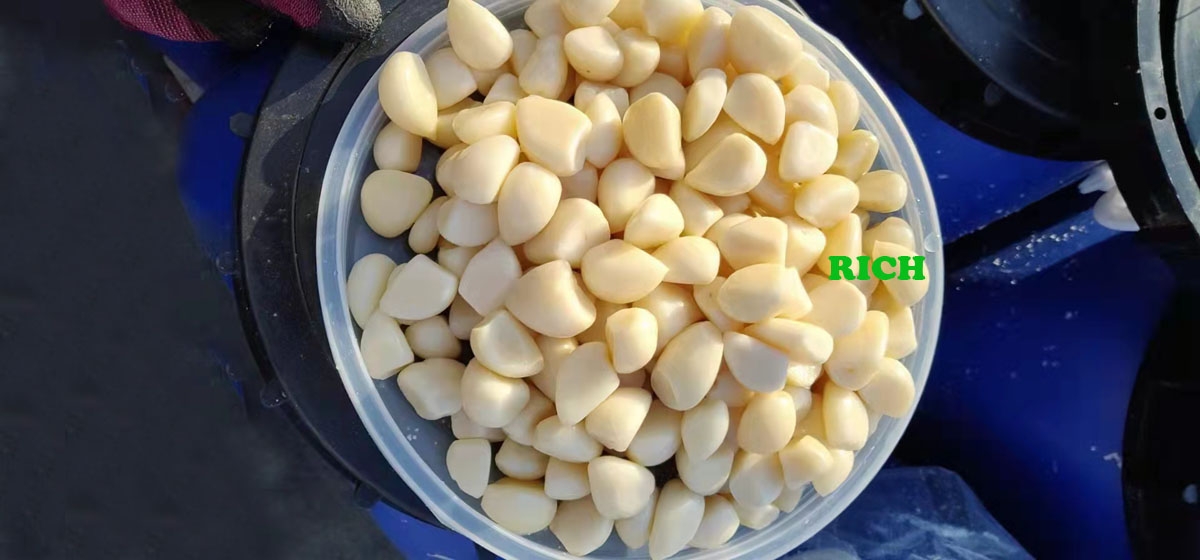
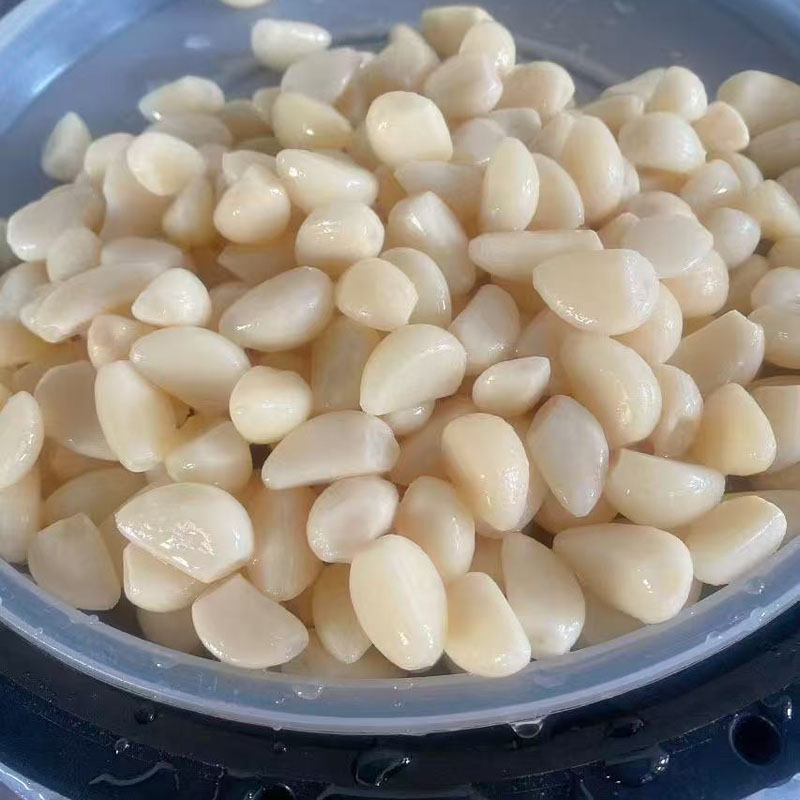
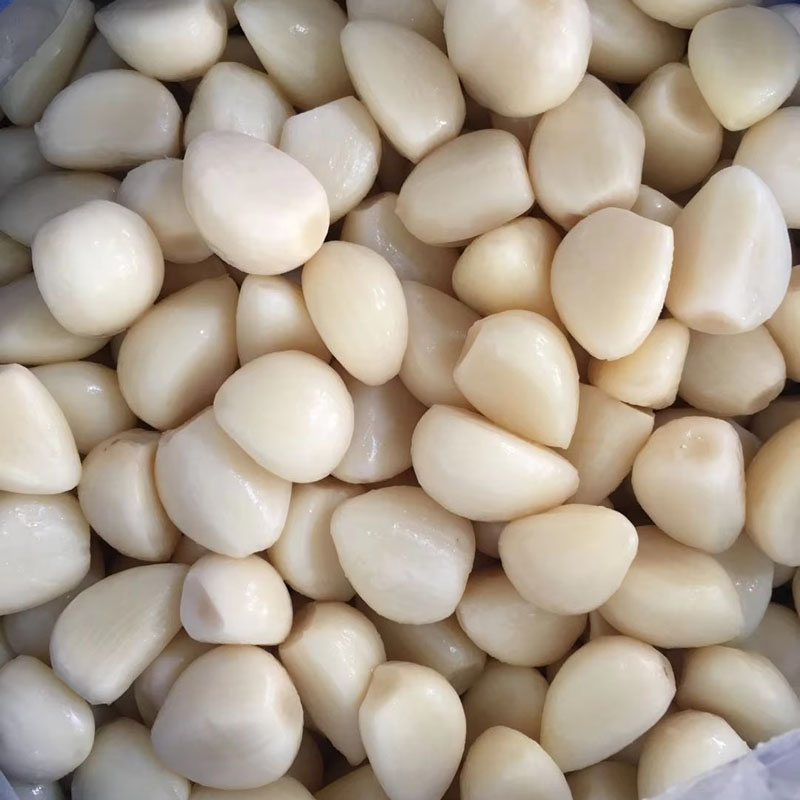
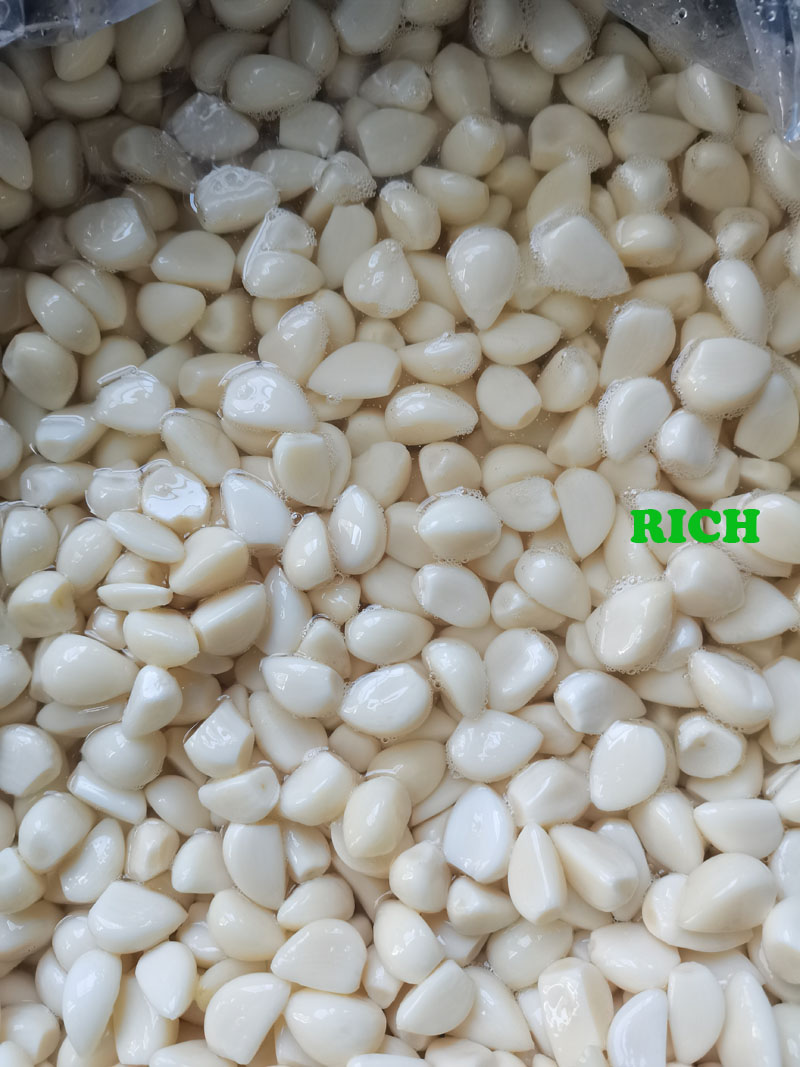
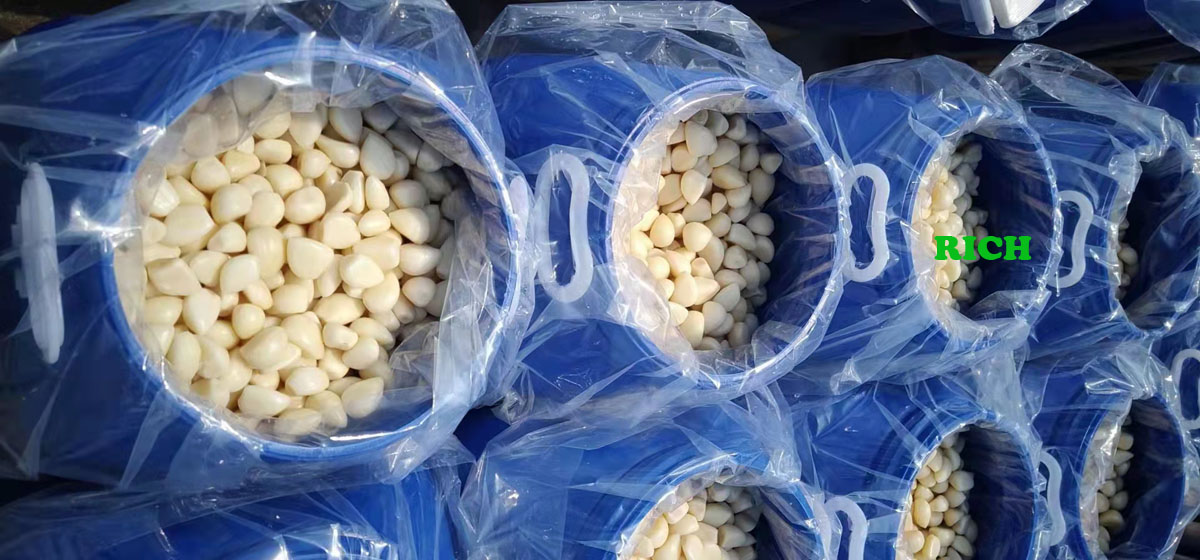
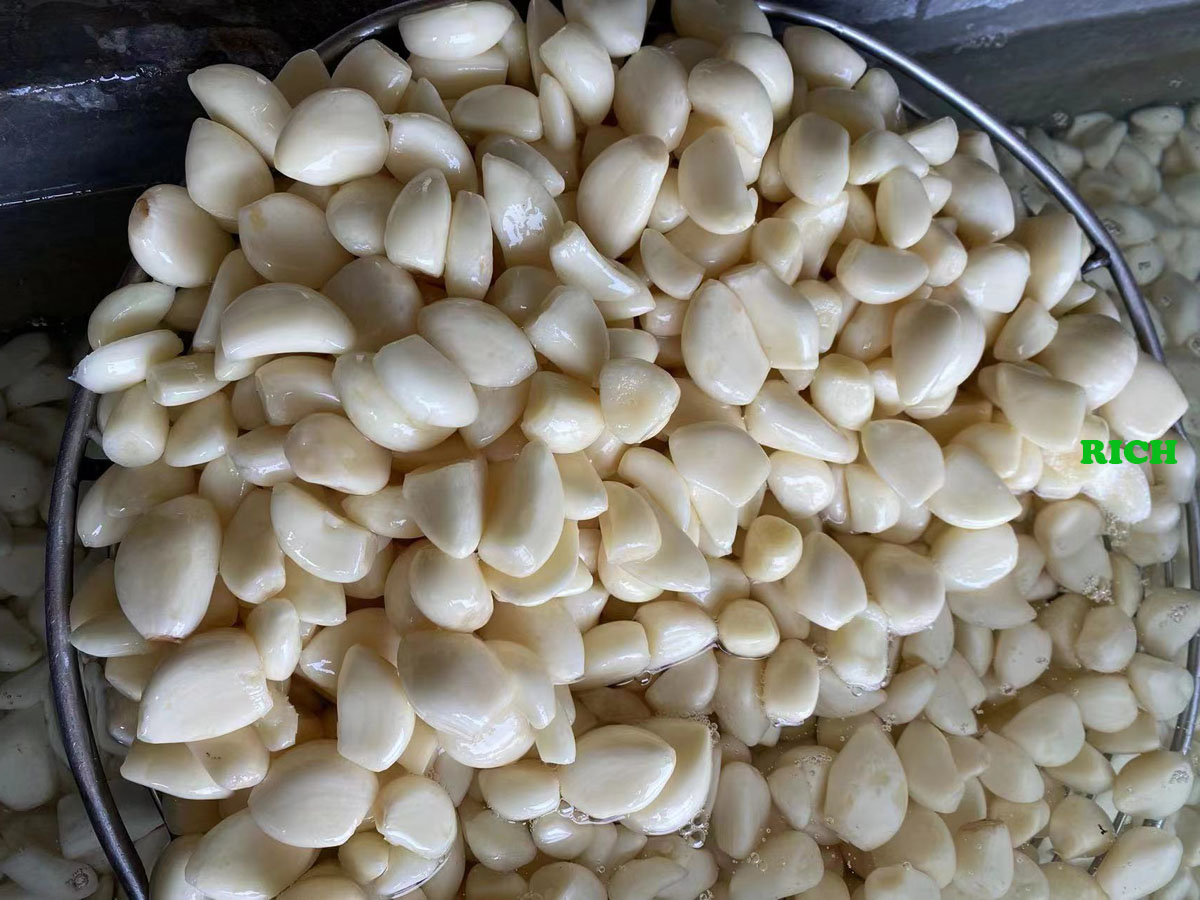
Salted garlic cloves in brine are peeled, whole garlic cloves stabilized in a measured saline solution that creates a controlled equilibrium between moisture, salt uptake, and enzyme suppression.
The goal is process readiness, not final consumption.
2. Why Brine Instead of Dry Salt
Brine preservation is selected to:
-
Ensure uniform salt penetration across clove layers
-
Prevent surface dehydration
-
Reduce mechanical damage during storage
-
Maintain clove elasticity for downstream cutting
This approach produces cloves that respond predictably during desalting and cooking.
3. Structural Behavior of the Cloves
-
Cell walls remain intact due to osmotic balance
-
Reduced enzymatic browning compared with fresh garlic
-
Stable sulfur compound retention for aroma control
This makes the cloves suitable for long thermal or fermentation processes.
4. Processing Applications
4.1 Ingredient Standardization
Used where batch-to-batch consistency is critical:
-
Industrial marinades
-
Spice pastes
-
Wet seasoning blends
4.2 Conversion into Multiple Formats
After desalting, cloves can be transformed into:
-
Crushed garlic
-
Sliced garlic
-
Garlic puree
-
Fermented garlic bases
One raw material supports multiple product lines.
4.3 Heat-Intensive Manufacturing
Applied in:
-
Retort sauces
-
Ready meals
-
Soup concentrates
Brined cloves maintain integrity under high-temperature processing.
5. Flavor Management Advantage
Unlike fresh garlic, salted garlic in brine allows:
-
Controlled pungency through desalting time
-
Reduced harsh top-notes
-
Smoother, rounded garlic profile
This is especially valued in export-oriented sauces.
6. Industrial Handling Characteristics
-
Non-sticky surface after rinsing
-
Low fragmentation during cutting
-
Consistent weight-to-volume ratio
These traits reduce line stoppages and yield variance.
7. Storage & Logistics Profile
-
Ambient or cool storage
-
No freezing or modified atmosphere required
-
Suitable for long-distance shipping
-
Resistant to seasonal supply disruptions
Ideal for regions without full cold-chain infrastructure.
8. Quality Control Focus Points
Key parameters monitored:
-
Salt equilibrium
-
Clove firmness
-
Visual uniformity
-
Brine clarity
-
Absence of off-odors
QC is centered on processing performance, not retail appearance.
Factory Strength
Salted Garlic Cloves in Brine
1). Raw Material Control at Origin
-
Direct sourcing from contracted garlic-growing zones
-
Variety selection based on clove firmness, oil content, and size uniformity
-
Harvest timing optimized to reduce hollow cloves and internal defects
Buyer value: stable texture and predictable processing performance.
2). Integrated Peeling & Sorting Lines
-
Multi-stage dry + wet peeling to minimize surface damage
-
Optical and manual sorting to remove split, bruised, or undersized cloves
-
Continuous removal of root remnants and skins
Buyer value: low breakage rate and clean clove appearance.
3). Precision Brining System
-
Automated salt concentration control
-
Continuous circulation and filtration of brine
-
Temperature-monitored soaking tanks
Buyer value: uniform salt uptake and consistent batch behavior.
4). Texture & Aroma Preservation Technology
-
Rapid post-peeling stabilization to prevent oxidation
-
Limited air exposure throughout processing
-
Controlled resting period for salt equilibrium
Buyer value: balanced garlic aroma and elastic cutting behavior.
5). Batch Traceability & Documentation
-
Lot-based production records
-
Raw material to finished drum traceability
-
COA and processing logs available per shipment
Buyer value: easier audits and import clearance.
9. Buyer Value Proposition
Salted garlic cloves in brine are chosen to:
-
Reduce raw material variability
-
Stabilize production planning
-
Lower total operational cost
-
Enable scalable manufacturing
10. Positioning Summary
Salted garlic cloves in brine are not a shortcut—they are a control system for industrial garlic usage.
Salted Garlic Cloves in Brine – FAQ
Industrial & Processing Use
1. What is the role of brine in this product?
Brine creates a controlled osmotic environment that stabilizes moisture, limits microbial growth, and preserves clove elasticity, making the garlic suitable for long storage and predictable reprocessing.
2. Is Salted garlic cloves in brine intended for direct consumption?
No. It is designed as a processing ingredient and must be rinsed and desalted before use in food production.
3. How does brined garlic behave after desalting?
After proper desalting, the cloves regain clean cutting behavior, controlled pungency, and stable texture comparable to freshly peeled garlic.
4. Does brining affect garlic aroma?
Brining moderates sharp volatile compounds while protecting core sulfur components. This results in a more uniform and manageable garlic aroma across batches.
5. Can salt levels be adjusted during processing?
Yes. Flavor intensity can be controlled by desalting duration and water changes, giving processors flexibility without altering raw material specs.
6. Is the Salted garlic cloves in brine suitable for slicing and crushing?
Yes. The cloves maintain structural integrity, allowing efficient slicing, dicing, crushing, or pureeing with low breakage.